February 17, 2023 — Part 1
Miscalculations by the U.S. and Russia in the Ukraine Conflict
Goro: Today is February 17, 2023. Our last summit was in October of last year, so it’s been four months. Are you both doing well?
Yūdai: The foot of Mount Iwaki is still blanketed in white; we’re right in the middle of winter hibernation. But my body is holding up well enough.
Allan: I’m still alive. I almost caught a cold once, but I recovered quickly with Kakkonto (herbal medicine), Ivermectin, and baking soda with lemon juice. I’m not sure which one did the trick, though.
Yūdai: How fragile. As far as my memory serves, I’ve never experienced anything called a "cold."
Goro: That’s because you keep yourself in shape, Yūdai-san. Your health at the cellular level must be different from us city folk.
Yūdai: That’s just a roundabout way of saying, "Idiots don't catch colds."
Goro: No, no, not at all!
Yūdai: Fine, fine. So, where shall we start today?
Goro: I thought Japan would be facing a severe food crisis by this winter, but we seem to be getting by for now. What’s scarier is how long the Ukraine conflict is dragging on. This must have been a miscalculation for both the U.S. and Russia. It’s reported to be a very tense situation where both sides are being backed into a corner and might use nukes...
Allan: Russia specifically might have miscalculated. They probably thought they could settle it much earlier. They surely didn't intend for it to drag on this long.
Goro: Where did they go wrong? Were they too cautious? Did they use a tedious approach to minimize casualties?
Allan: In a nutshell, yes. With Russia's military power, taking central Ukraine would be easy if they just rained down missiles. But doing that inevitably involves massive civilian casualties and catastrophic infrastructure destruction. Their goal was to wipe out the Neo-Nazi factions in Ukraine and eliminate NATO bases, clandestine biochemical weapon research facilities, and missile sites. They wanted to minimize deaths. But to do that, they had to incorporate inefficient, old-fashioned methods, which led to Russian soldiers being killed as well. Consequently, it took far more time than planned, and the losses—especially in human lives—became significant.
Yūdai: And what about the American miscalculation?
Goro: Didn't the U.S. think that the longer the war dragged on, the better?
Allan: Probably, but they might be running out of ammo. While Russia leads in quantity, it’s becoming clear that they’ve also surpassed the U.S. in technology without anyone noticing. The U.S. exports high-tech fighters and missile defense systems at exorbitant prices, but Russia has developed and stockpiled weapons with a focus on how to efficiently and rationally annihilate the opponent, rather than profiting from sales. I’ve heard that Russia is more advanced than the U.S. in both technology and implementation of EMPs.
Yūdai: EMP? What on earth is that?
Allan: It stands for Electromagnetic Pulse. Specifically, it involves detonating a nuclear weapon in the high atmosphere—dozens to hundreds of kilometers up. The resulting electromagnetic pulse fries all electrical systems and digital devices on the ground, rendering them useless. Nowadays, the mainstream thinking is to use nuclear weapons at high altitudes rather than dropping them on the ground. If used on the ground, buildings and life are destroyed. But as an EMP, there’s no immediate direct damage to buildings or people. However, in modern society, if the electrical grid is paralyzed, production, transport, and communication stop. Cities descend into a "starvation hell," and war becomes the last thing on anyone's mind. Of course, without digital devices, missiles and fighter jets become useless junk.
Yūdai: I see. The very concept of war has changed drastically.
Goro: The recent string of "balloon shoot-down" incidents is also suspected to be linked to EMPs. They say they’re surveillance balloons, but some suspect they’re simulations or demonstrations for an EMP attack. They fly at over 10,000 meters, and they’re too large just to be carrying surveillance gear. If you wanted to spy, you’d just use a satellite.
Allan: If the U.S. were to use nukes, I think they’d try to launch them from NATO territory in Europe at a short range rather than firing from the mainland. The U.S. seems to have lost its mind lately, so they might actually do it. Russia and China, sensing this, are likely doing various things to signal, "We’re serious too—we can paralyze the entire U.S. with an EMP if we have to."
Yūdai: What’s the basis for thinking they’d fire from NATO territory?
Allan: The U.S. wants to maintain the pretense that they aren't at war and aren't a direct party. It’s pointless because everyone knows, but they are terrified of retaliation. So, they’ll make Germany or Poland do it. There are even rumors that nuclear warheads have already been moved into Germany.
Goro: The UK is supposed to be a leader in NATO, but they seem to be getting cold feet regarding the Ukraine conflict, trying to push the burden onto Germany. Their military resources seem to be hitting rock bottom. It was also reported that the Nord Stream sabotage was ordered by the U.S. and carried out by the British Navy.
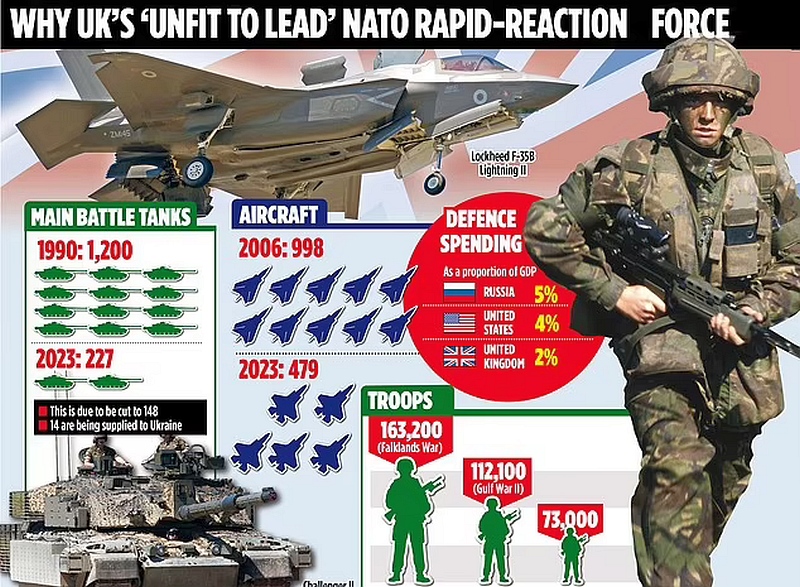
MailOnline News 2023/02/12
Allan: Regarding that, the famous Pulitzer Prize-winning American journalist Seymour Hersh just leaked that a U.S. Navy diving and salvage team did it with Norwegian cooperation. He named National Security Adviser Jake Sullivan and Secretary of State Antony Blinken as the key figures in the conception and planning.
In short, they’ll do the sabotage and agitation, but they don't want to step onto the battlefield with a gun. They want Germany to do the dirty work.
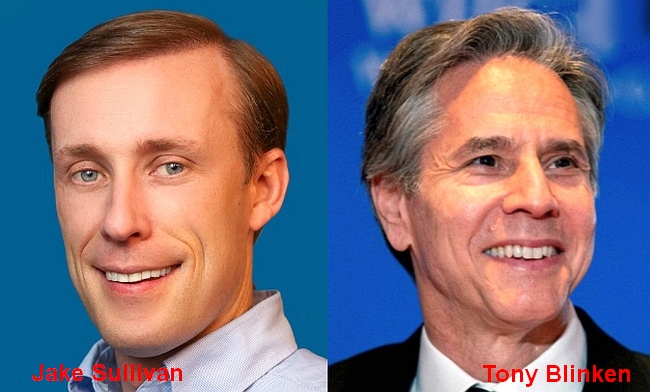
Left: Jake Sullivan, Right: Tony Blinken
Yūdai: It’s like that comedy routine by the "Dachou Club."
UK: "I’ll do it!"
USA: "I’ll do it!"
Germany: "Fine, then I’ll do it."
UK, USA, and other NATO countries: "Please, be our guest!"
Goro &
Allan: (Laughs)
Goro: Yūdai-san, you really have an unexpected side. I didn't see a Dachou Club reference coming.
Allan: Well, the German Chancellor is a hardcore WEF member. I feel he prioritizes a religious-like sense of mission to create a One World Government over his own country's safety.
Yūdai: So, Germany holds the key to whether nuclear weapons will be used in Europe.
Allan: Russia is already aware of this. Since the damage would be catastrophic if they are hit first, they’ll likely execute an EMP attack the moment they see moves to load nuclear warheads onto missiles. Putin trusted Merkel when she acted as a mediator for the Minsk Agreements, only to be utterly betrayed. His resentment must be doubled now that he knows he was being deceived by someone he once trusted. If they execute this over Germany or Poland, countries like the Czech Republic, Slovakia, and Hungary will be caught in the fallout. For a country like Hungary, which opposes sanctions on Russia, that would be a terrible stroke of bad luck.
Goro: And at the same time, could missiles be launched from Russian submarines in the North Sea toward the U.S. mainland...?
Allan: It’s possible. If that happens, it truly becomes World War III... or rather, an Armageddon.
Yūdai: Dreadful. If that happens, can Japan survive?
Allan: I doubt it.
Yūdai: Japan isn't even the guy taking the fall in the comedy routine; we’re more like the mother of Yamagami (the assassin).
Goro: That’s... not something we can laugh at.



 Take a look at Amazon.com Click HERE!
 Kindle version is also available!
 back Index
 next
next home
home