Goro: To be honest, I feel like the media in every country is failing to properly explain the actual background of how this Ukraine conflict even started.
Yūdai: The Western media portrays it as the "Evil Russian Empire" and a "Power-hungry Dictator Putin" invading a peaceful agrarian Ukraine to set up a puppet regime... but the reality is far more convoluted, isn't it?
I heard you have Russian blood, Issikov-san. What is the logic from the Russian side?
Allan: It’s true that my father was Russian and my mother was a Japanese woman born in Hungary, but I’ve lived in my maternal grandfather’s house in Japan for as long as I can remember. I don’t claim to understand the internal affairs of Russia or the Russian psyche.
My father was a trader, constantly moving between Japan and Russia, but I had almost no contact with him. My mother died of an illness before I turned two, and he was too busy with work to raise a child. He was wealthy enough, though—he sent me to my mother's family with a generous upbringing fund and eventually remarried.
I grew up in Japan, but I attended an international school, surrounded by English-speaking children. So, my sensibilities might be quite different from the average Japanese person’s.
Yūdai: A rather peculiar upbringing. But surely that means you possess some insight into Russian affairs?
Allan: Well, I’m still in touch with my friends from those international school days, so I get a fair amount of information. My friends are a "complicated" bunch, so there’s plenty of insider info and suspicious rumors.
Goro: Now we’re talking! That’s exactly the kind of stuff we want to hear.
Allan: It’s nothing groundbreaking. I suspect it’s mostly things you already know, Goro-kun. In fact, don’t you have more information than I do? What’s your take on it?
Goro: Oh? Me? Talk about a boomerang question. Alright, fine.
Personally, I think the structure isn't much different from the wars we've seen on repeat over the last few decades. Like the Middle East or Afghanistan.
Allan: Specifically?
Goro: Western media, including Japan’s, reports it as a unilateral war of aggression triggered by Putin. But fundamentally, I think it was triggered by a "civil war" that the U.S. instigated within Ukraine.
Allan: (Nods) Go on.
Goro: Ukrainian history is so chaotic and tragic that it feels almost disrespectful for someone like me, who hasn't experienced war, to speak of it lightly. But in recent years, you have the 2014 Maidan Revolution (which was essentially a coup), the tangled power games over Crimea, and the security issues in the Donbas region. The soil of Ukrainian domestic politics was already unstable.
I suspect the U.S. used that instability to plot the division of Ukraine and the establishment of a pro-Western government through that coup.
Meanwhile, the NATO forces led by the U.S. were slowly squeezing Russia, aiming for containment and weakening. They probably figured that if Russia took the bait and launched a military action—just like they did in Afghanistan—they could use it to bleed Russia dry.
Allan: The Soviet Union did collapse because of Afghanistan. So, they aimed for a rerun.
Goro: But this time, Russia didn’t just mindlessly jump in. They prepared thoroughly while pushing back. And now, things have finally gone kaboom...
From Russia’s perspective, it’s like: "We’ve prepared for this, so let’s use this opportunity to establish a new global economic sphere centered on Russia and China."
Allan: Yes, that aligns with the general consensus among my circles.
However, after it went kaboom, both Russia and NATO faced miscalculations.
Many media outlets report that Russia’s "huge miscalculation" was the Ukrainian army’s unexpected resilience against Russia’s overwhelming military might. But the current Ukrainian army is essentially a NATO army. This isn't at all like when the U.S. unilaterally attacked and destroyed Iraq.
Since the 2014 Maidan coup, the Ukrainian military has been trained by U.S. and NATO forces both inside and outside the country. They are reportedly equipped with the latest weaponry and act with swift decisiveness under a sophisticated command structure. Apparently, they can coordinate instantly with NATO forces anywhere in the world.
On the other hand, Russia wants to seize control without damaging Ukraine’s fertile breadbasket if possible. They don’t want to just rain down bombs indiscriminately. But because the Ukrainian military is strong, it’s not going smoothly. I imagine there’s frustration on the front lines, leading to disrupted command chains or "excessive" actions.
Yūdai: And as a result, civilians keep dying.
Allan: It’s unbearable. But the people orchestrating the war likely have little concern for how many Ukrainian civilians die. They see them merely as pawns to achieve an objective. That is how war has always been.
Goro: If human life and peaceful living were the priority, the "best realistic solution" would have been to implement the Minsk Agreements and avoid unnecessarily provoking Russia. But NATO didn't do that.
Allan: No matter how you look at it, NATO’s provocation went too far.
At the NATO summit in Bucharest in April 2008, the main topics were the conflict in Afghanistan and NATO’s expansion strategy. Regarding expansion, they discussed upgrading Ukraine and Georgia—both former Soviet states—to candidate status. Ultimately, they deferred it out of consideration for Russia, but after that meeting, William Burns, who had just become Under Secretary of State for Political Affairs, reportedly wrote a memo:
"On NATO expansion, 'No' means 'No.' Russia is serious. If we do not take Russia's requirements seriously, Russia will sooner or later resort to military action. That would mean the destruction of Ukraine. As a result, Ukraine would lose Crimea and the Donbas."
Goro: And that is exactly what’s happening right now.
Allan: Precisely.
At that same summit, they also resolved that NATO would strengthen Afghan leadership and promote cooperation between the military and NGOs. That methodology matches exactly what NATO has been doing in Ukraine since the Maidan coup.
The military training facility near the Polish border that the Russian military bombed first is actually named the "International Peacekeeping and Security Centre." It’s said that foreign instructors dispatched from NATO were training elite units there at a rate of five battalions per year and sending them to the Donbas.
The Ukraine conflict didn't start just now. Since 2014, many civilians have been killed in the eastern Donbas region. Some say that among the elite Ukrainian units, there are those with extreme ideologies who believe it’s fine to kill Russian-speaking Ukrainians. Russia’s argument is that they couldn't stand by and watch their Russian-speaking brothers be slaughtered. Some call that one-sided Russian propaganda, but is it?
By the way, William Burns—the man who warned about NATO expansion back in 2008—served as the Ambassador to Russia from 2005 to 2008 and was intimately familiar with the country. He’s an intellectual diplomat who went on to become Under Secretary for Political Affairs and then Deputy Secretary of State. And get this: since 2021, he has been the Director of the CIA under the Biden administration.
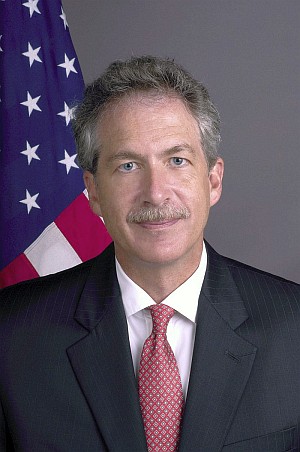
(Image: William Joseph Burns)
Goro: I’d love to take a peek inside his head.
Allan: You’re so young, Goro-kun. I certainly wouldn’t. I’d be terrified of being sucked into a murky, terrifying darkness.
Goro: I may be a "youngster" compared to you two, but I’m nearly 50. Wait, is that still considered young?
Yūdai: A mere fledgling. Cheep, cheep.
Goro: Fine, fine. Cheep, cheep.
Anyway, the background of this Ukraine conflict is definitely too complex to fully grasp from the sidelines.
Even for Russia, even if they were provoked by NATO, was it really the right move to go kaboom at this stage? I wonder if Putin regrets it.
Allan: We can’t know for sure. The information coming in is so scrambled; you don't know what to believe.
We can see the macro-structure, but the individual elements are hard to discern.
For instance, is Putin senile? Does he have thyroid cancer? Or Parkinson's? I can’t judge the truth of those claims. Same goes for the theories about Biden's dementia.
The information we receive could be 100% fact, or a complete lie. Both extremes are possible. That’s why I try to organize the information by assigning "probability percentages" to the truth of each claim.
Goro: I agree! How does that look in practice?
First, the idea that the U.S. orchestrated the 2014 coup?
Allan: I’d say that’s about 80% likely to be true.
There were trained snipers among the protesters who targeted the crowds; there seems to be video evidence of that.
Also, the extremist groups that still worship the late Stepan Bandera—a man of ultranationalist, fascist ideology—led the Maidan coup. The claim that the CIA trained them in facilities within the U.S.? I’d put that at 60%.
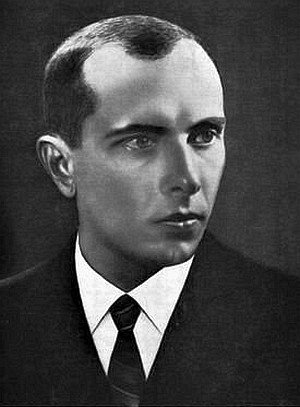
Stepan Bandera(1909-1959) from Wiki
Allan: Opinions on Bandera are split down the middle. Some say linking him to Nazis is just Russian propaganda, but it’s undeniable that his actions were driven by nationalist ideology.
Nowadays, you have people like Andriy Biletsky of the National Corps, a representative of racial hatred and violence, who openly claims that Europe must be made "white" again and that Ukraine will be its frontline. The fact that the Azov Battalion is led by someone like Biletsky, and that the U.S. provides them military aid, is almost never reported in Japan. Unlike the Bandera talk, this is happening in the present tense, so it’s hard to dismiss it all as fabrication.
Biletsky’s "racism" includes discrimination based on language. The logic is that Russian-speaking Ukrainians are traitors and should be eliminated. In fact, when the current administration tried to pass a law banning the Russian language, the people of Donbas revolted, and the conflict intensified. It would be like the Japanese Diet seriously debating a law to ban the Kansai dialect tomorrow. Probably more extreme than that, but those are the kinds of things still happening normally in Eastern Europe.
Those Russian-speaking citizens are specifically the people of the eastern Donbas. It’s said that the Ukrainian military and police—including the Azov Battalion, which is now a regular part of the military—have been shelling and massacring people in the Donbas ever since the Maidan coup.
I’d say that is over 60% likely to be true. I can’t say 90% because I haven't experienced it firsthand, and in this kind of civil war, inhumanity likely exists on both sides. You can’t say one side is 100% righteous.
But it’s the civilians who suffer, and it’s a 100% fact that people are being killed in the conflict every day. It’s truly gut-wrenching.
Goro: I’ve heard that after WWII, many people who collaborated with the Nazi Holocaust remained in Ukraine and Poland. That ideology slowly spread and even influenced education.
Planting "Banderism"—white supremacy and ultranationalism—in children seems far more terrifying than military aid.
Allan: Exactly. Ukraine is a country where such complex factors are intertwined, which is why a solution is so hard to find. Most people think Russia just unilaterally invaded, but in reality, this is a tragedy where "zombies" from the Cold War era are intervening in a civil war taking place on vast, fertile land.
Broadly speaking, there’s a significant difference in culture and ideology between the people of western Ukraine and the easterners who use Russian daily and have deep ties to Russia.
But even the people in the west have seen their land turned into a horrific battlefield many times. They know the terror of Nazism entering their country again. That’s likely why they elected a moderate like Yanukovych. But that administration was toppled by violence. The people who participated in that coup were also ordinary western citizens. Even if they were skillfully manipulated, they probably don't view the current administration as a "puppet regime."
Yūdai: Westerners are always so extreme in their actions. I wonder if it’s because they eat so much meat.
Goro: Uh, Yūdai-san... that might be a slightly problematic comment.
Yūdai: Oh, what of it? It’s just "drunk talk" anyway.
Goro: Wait... Yūdai-san, are you drinking right now?
Yūdai: Is that forbidden? I’m not the type to get violent when drunk.
Allan: Well, we’re online anyway. Even if you get rowdy, it won’t bother us. Let’s just go with the flow. No matter how serious we get, there’s nothing we can do about it anyway.

 back
back
 next
next home
home